L'Atelier · Châteauneuf-du-Rhône, Provence
An artist who has spent forty years refusing to be found — and the light of Provence, which he has never stopped chasing.
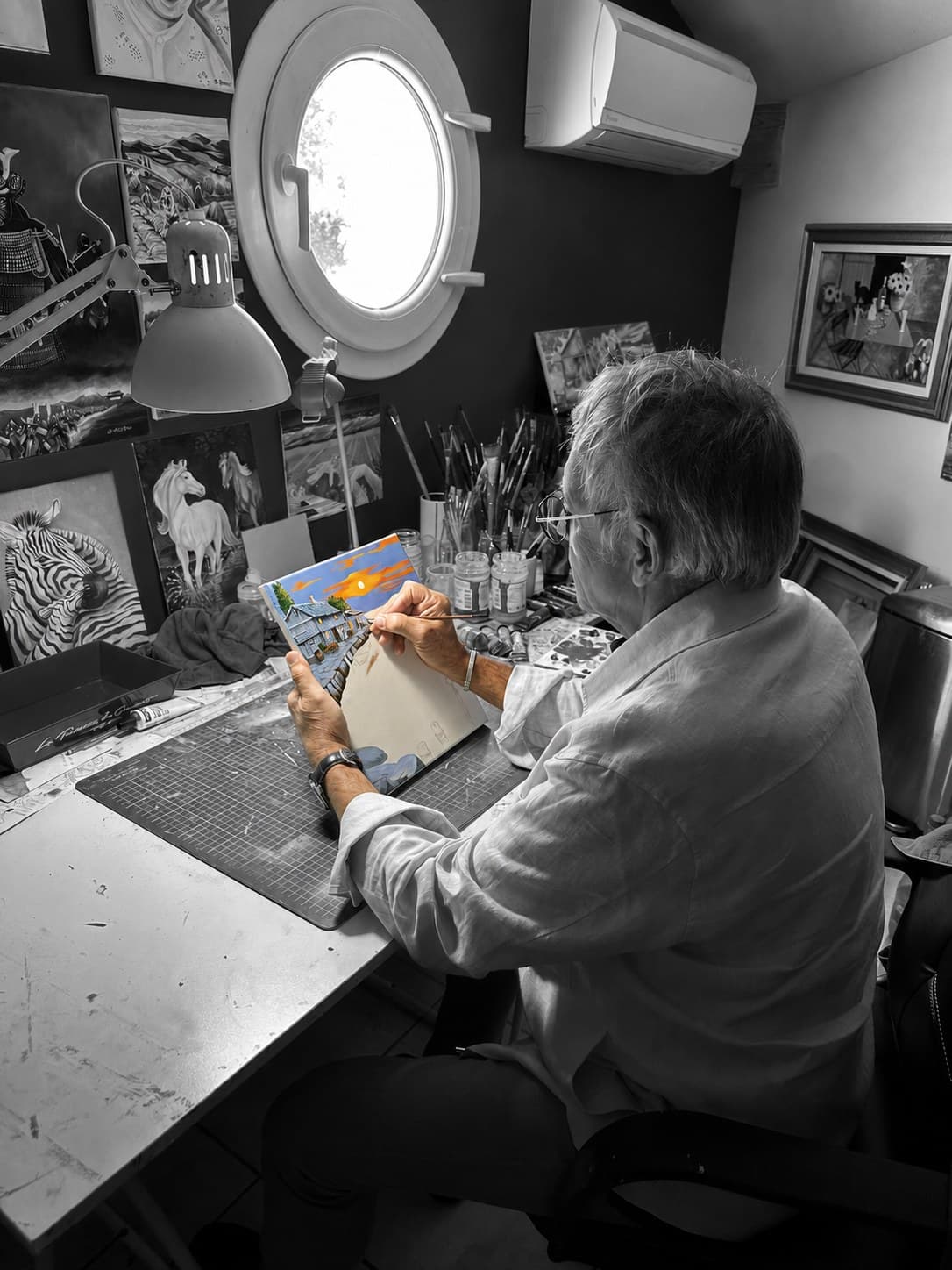
Breteau photographed in his element, May 2024.
Didier Breteau was born in Paris in the winter of 1956, into a family that kept its stories close. On his father's side the line runs, so the family holds, to an officer of Napoleon's Grande Armée — a man who carried a small watercolour of the Midi through the Russian snows and swore, if he lived, to end his days beneath that light. On his mother's side came the Spanish mountaineers of the high Pyrenees, shepherds and smugglers who read weather the way others read scripture. Breteau says he inherited two things from them: the soldier's discipline, and the mountaineer's patience for waiting on the sky.
He did not paint until he was twenty-seven. For the years before, he worked — at what, he will not fully say — and by his own account was “a Frenchman without a France,” a man in love with a country he could not find in the city. In 1983, on a walk that was meant to last a weekend, he came over a rise near Ménerbes at the hour before dusk. He has described what happened next only once, in a letter: “The valley was on fire without burning. I understood that everything I loved about France was made of light, and that no one had told me it could be kept.” He bought paper the following morning. He has not stopped since.
He works alone, in a home-studio attic on the edge of Châteauneuf-du-Rhône — its shutters the particular blue he mixes himself from a pigment bought once a year in Montélimar. He paints in watercolour and in thin, patient acrylic — always from life, and only at the two hours he trusts: first light, and the last hour before the sun goes. The rest of the day he walks, and waits.
For most of his life his work has been almost impossible to acquire. He has refused representation by three galleries, does not exhibit to a schedule, and has sold chiefly by word of mouth to collectors who learned of him through other collectors — a list that is said to be long, and closed. Paintings leave the attic only when he decides they are finished, which can take years, and only to people he has met.
This is the first time, at the studio's own hand and against its every instinct, that a selection of the work is being offered beyond that circle — as signed, numbered digital editions, each released in a strictly limited run. It is as close as most will come to a Breteau. He would prefer you understand that it is not the same as the thing itself.
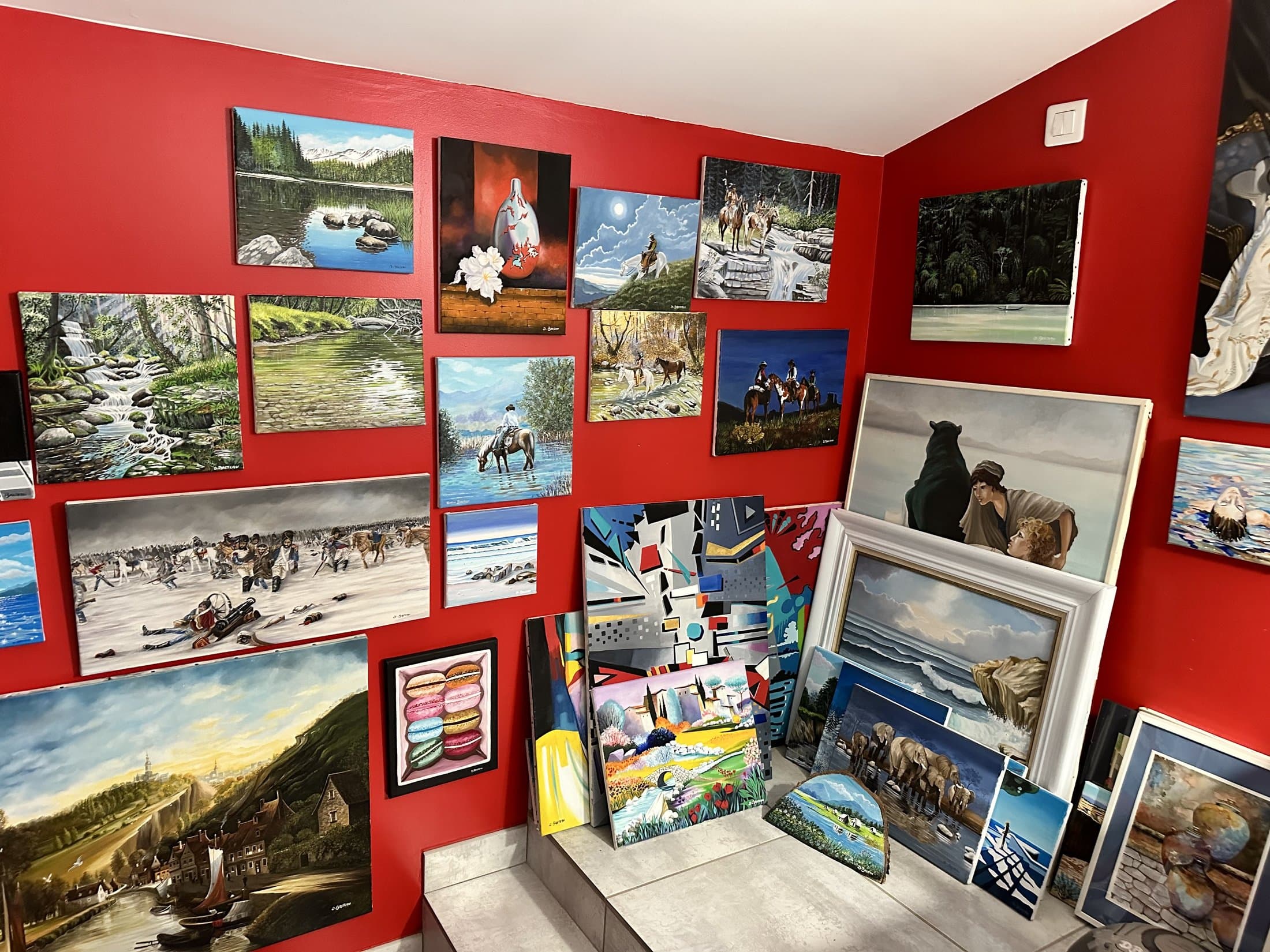
The atelier at Châteauneuf-du-Rhône — some of the pieces, hung close.
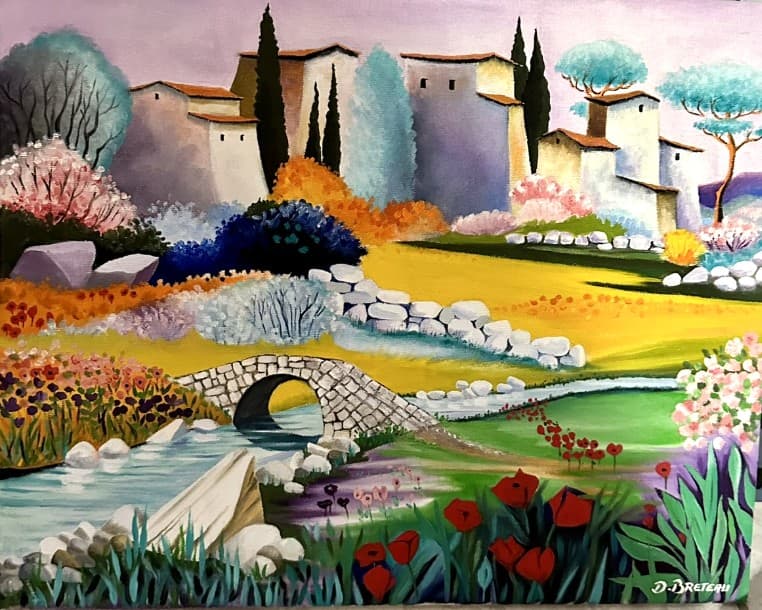
“I am not painting Provence. I am painting the light that is about to leave it — before someone tells me, again, that it cannot be kept.”
Didier Breteau, from a letter, 1991
Le savoir-faire
A craft kept the old way
Nothing here is hurried, and nothing is left to the machine. Breteau keeps to a savoir-faire handed down more than invented — the patience of the joiner, the discipline of the soldier, the art de vivre of the Midi.
La lumière
The light
He paints only at the two hours he trusts — first light, and the last hour before the sun goes. The rest of the day he walks, and waits. The light of the Midi cannot be summoned; it can only be met.
La matière
The materials
Cotton paper, pressed by hand. A blue mixed himself from a pigment bought once a year from the same colourman in Montélimar — when the pigment is gone, he says, the blue is gone. Nothing is bought that could be made.
Le geste
The hand
Whether in watercolour or a thin, unforgiving acrylic, he works without a safety net — the gesture is either true or the sheet is begun again. Forty years in, he still discards more than he keeps. C'est le métier: this is the trade.
A life, in brief
The record
Deliberately sparse. He has kept few dates and fewer press cuttings.
- 2026First works released as signed digital editions
- 2016Declines a retrospective offered in Paris
- 2009A single, unannounced showing — Aix — closes in a weekend
- 1994Begins the Villages series, still unfinished
- 1983The walk near Ménerbes; takes up the brush at twenty-seven
- 1956Born in Paris
Questions
In brief
The things people ask most often about the artist, the studio and the editions.
- Who is Didier Breteau?
- Didier Breteau is a French artist, born in Paris in 1956, who lives and works in Châteauneuf-du-Rhône in Provence. For forty years he has painted the light of the Midi, working alone and largely outside the gallery system.
- What does he paint?
- He paints the villages, the coast and the fields of Provence and the Côte d'Azur — in watercolour on cotton paper and in thin, patient acrylic, always from life and only at first light or the last hour before dusk.
- Where is his studio?
- He works from a home-studio attic on the edge of Châteauneuf-du-Rhône, in Provence. The studio is open by appointment only.
- How can I buy his work?
- Signed, numbered digital editions can be purchased directly from this site, from €95. For original works and private commissions, write to the studio at studio@didierbreteau.com.
- What is a signed digital edition?
- A signed digital edition is a high-resolution file of the work, released in a strictly limited numbered run and prepared by hand at archival resolution. You receive an instant download link by email with the studio's guide to printing it true, at home or at your chosen lab.
- Are the works original?
- The paintings in the catalogue are original works — watercolours and oils painted by hand. The editions offered for sale here are signed, numbered reproductions of those originals, not the original paintings themselves.